
Experience in creating a fluid friction bearing (FFB) lubrication system on a hot rolling mill
Client:
PJSC "Severstal"
Year of Implementation:
2017
In 2016, on the 1700 mill of PJSC "Severstal," the existing fluid friction bearing (FFB) lubrication system for the support rolls in cages No. 5 and 6 could no longer ensure stable bearing operation under extreme loads. The oil temperature at the bearing drain reached 59–61°C, causing the bearings to overheat, reducing rolling speed, and damaging trunnion bushings and FFB liners. This led to reduced mill productivity and increased unplanned downtimes.
In 2016, PJSC "Severstal" management tasked the modernization of the FFB lubrication system on mill 1700 with the following objectives:
- Increase production of hot-rolled coils by 5,000 tons per year;
- Ensure stable operation of the FFB in cages No. 5 and No. 6 at all rolling modes;
- Reduce unplanned downtimes;
- Lower FFB maintenance costs;
- Enhance system information capacity;
- Replace the outdated control system.
After diagnosing the system, Ural Engineering Center (UrIC) specialists identified the main issues with the lubrication system:
- Insufficient oil cooling efficiency;
- Low lubrication pump performance;
- Inadequate precision in maintaining oil pressure at the bearing inlet;
- Small oil tank capacity;
- High pressure losses in the system's discharge line;
- Outdated control system.
To address these issues, UrIC specialists proposed the following solutions as part of the modernization project:
- Increase system flow rate;
- Replace piping;
- Install an additional heat exchanger;
- Install new pressure control units;
- Install a diagnostic system for each bearing.
The proposed solutions and system parameter selections were supported by calculations.
The modernized lubrication system allowed for the following improvements:
- Provide the required oil flow to the mill bearings without pressure drops;
- Maintain the set oil pressure at the bearing inlet during all mill operation modes;
- Remotely release pressure at the bearing inlet during roll changes;
- Maintain the set oil temperature at the bearing inlet;
- Maintain the set oil temperature in the lubrication system tanks during downtimes;
- Detect the source of water contamination in the hydraulic system oil;
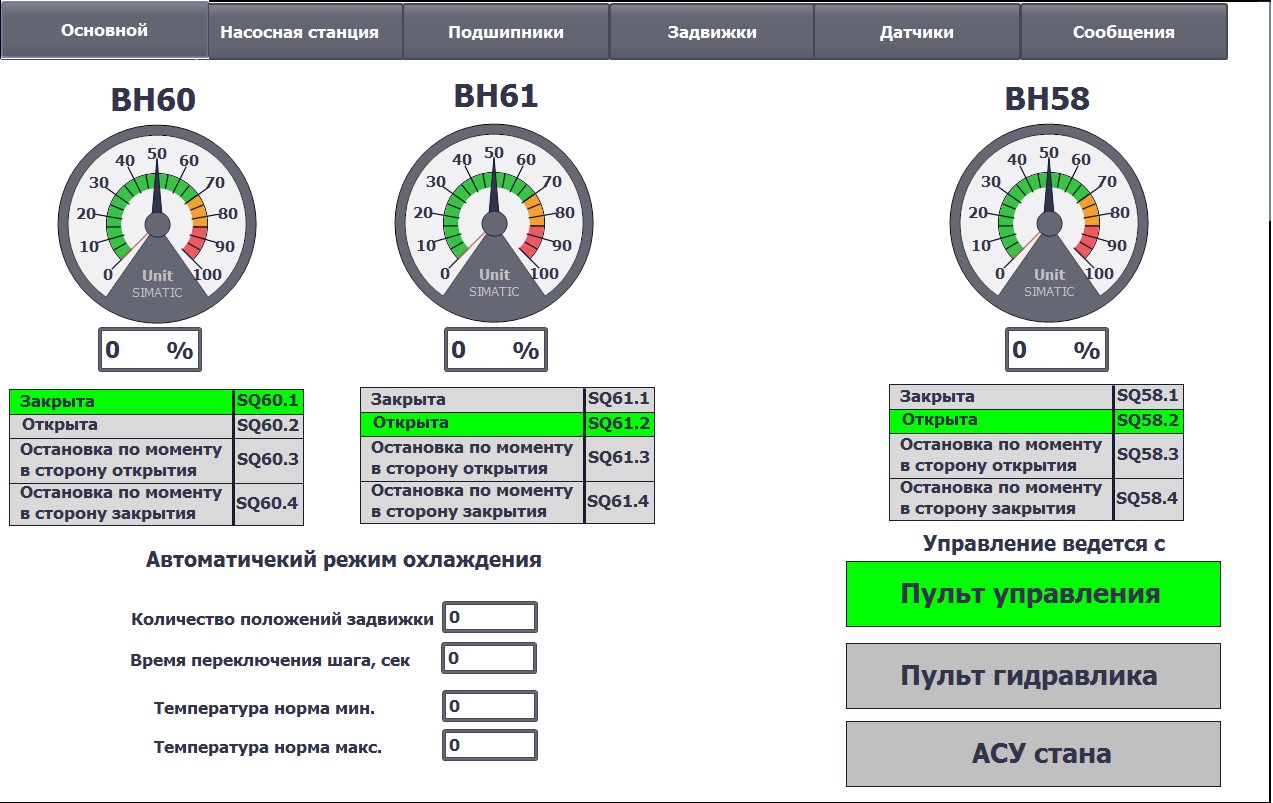
- Remotely monitor the operating parameters of each FFB in cages No. 5 and No. 6;
- Remotely monitor the operating parameters of the lubrication system's pump station.
As a result, machine time on the 1700 mill increased, and production of ultra-thin hot-rolled strips rose by 130,000 tons per year.